
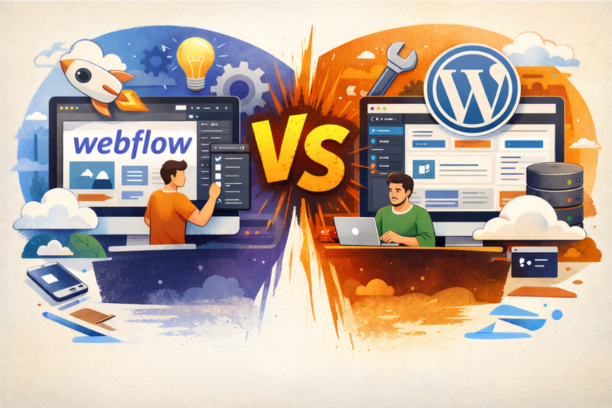
Webflow vs WordPress: Which Platform Is Best for Your Business Website?
Compare speed, security, SEO, scalability, CMS flexibility, design capabilities. Since TadSolution uses Webflow, position it as the modern, clean, scalable choice.
Introduction
Choosing the right platform for your business website is one of the most important decisions you’ll make. Two top options today are Webflow and WordPress. Both are powerful — but they serve different needs, budgets, and goals.
Here’s a simple comparison to help you decide.
1. Speed and Performance
- Webflow: Fast, lightweight, optimized out of the box.
- WordPress: Depends on hosting and plugins — can become slow if not managed properly.
Winner: Webflow.
2. Security
- Webflow: Hosted securely with zero plugin maintenance.
- WordPress: Vulnerable if plugins are outdated or poorly developed.
Winner: Webflow.
3. Design Flexibility
- Webflow: Pixel-perfect design freedom, animations, and custom layouts.
- WordPress: Limited unless you use page builders like Elementor
Winner: Webflow.
4. Maintenance
- Webflow: No updates, no plugin issues, no technical headaches.
- WordPress: Requires ongoing maintenance, plugin updates, backups.
Winner: Webflow.
5. CMS Control
Both platforms offer CMS collections, but Webflow makes it easier for non-technical users.
Final Verdict
If you want a modern, fast, stylish, low-maintenance website — Webflow wins.
If you need complex custom plugins or e-commerce integrations — WordPress may work.
At TadSolution, we recommend Webflow for 90% of business websites because it offers the perfect balance of design, performance, and simplicity.
Was this article helpful?
Join the feedback revolution! We're all ears, ready to absorb your thoughts and transform them into content that you enjoy!
Subscribe & stay up to date!
Subscribe today to receive golden nuggets of financial wisdom & blog updates straight to your inbox.